
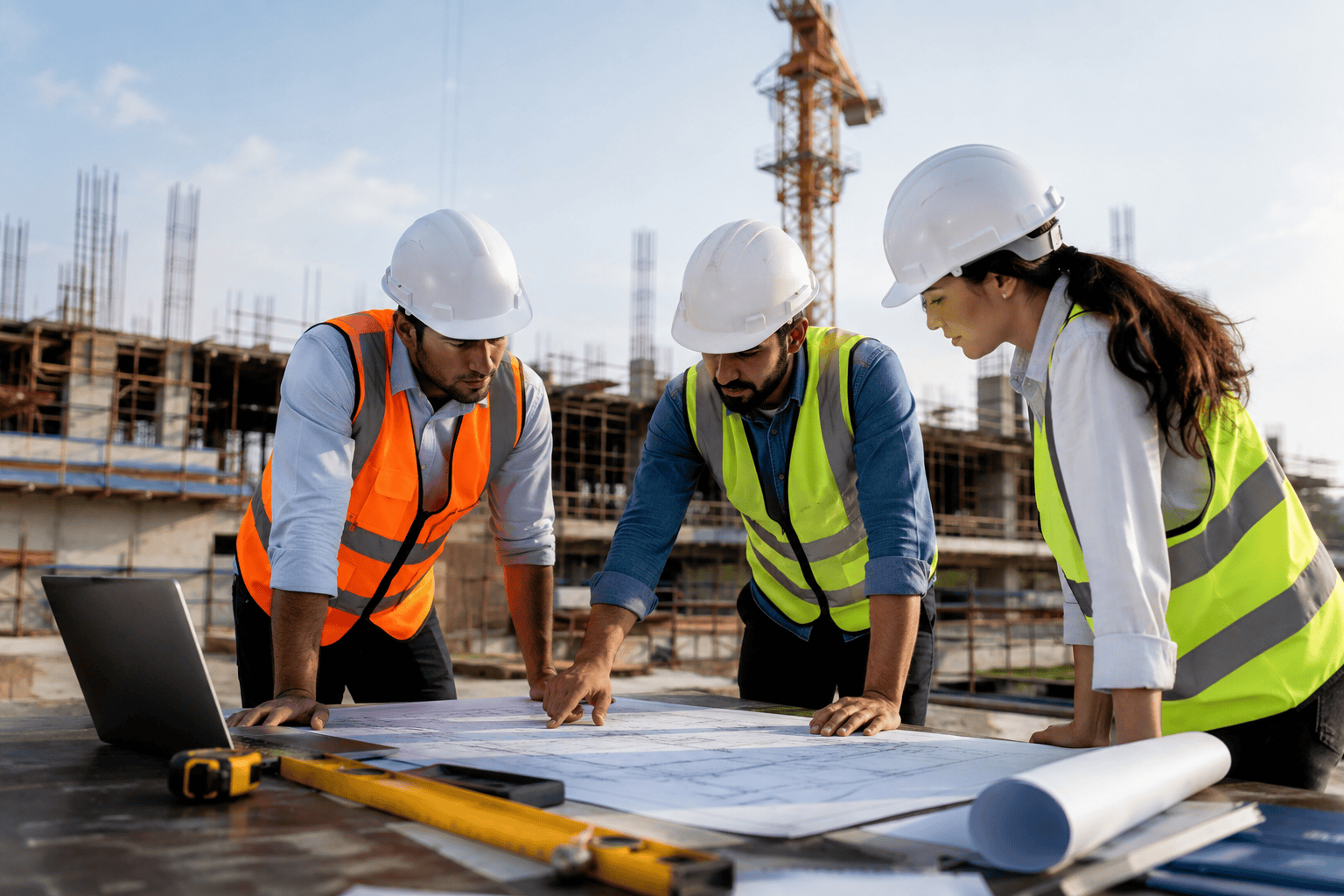
In construction, a successful project is rarely defined by the finished structure alone. It is defined by how effectively an idea moves from drawing board to reality within the intended budget, timeline, quality standards, and technical parameters.
That is where Project Management Consultancy (PMC) comes in.
A construction project brings together architects, structural consultants, contractors, vendors, engineers, clients, regulatory authorities and several other stakeholders. Without a clear system of coordination, even a well-designed project can face delays, cost escalations, communication gaps and quality issues.
A Project Management Consultancy provides the professional oversight and coordination needed to bring these moving parts together.
Rather than replacing the architect, contractor or client, a PMC works as a central management layer helping ensure that the project progresses in a structured, coordinated and measurable manner.
Understanding Project Management Consultancy in Construction
At its simplest, Project Management Consultancy (PMC) is a professional service that manages and coordinates different aspects of a construction project on behalf of the client.
The PMC acts as a bridge between the project’s vision and its execution.
From planning and scheduling to coordination, documentation, monitoring and reporting, the objective is to create greater visibility over what is happening on-site and what needs attention next.
This becomes particularly important as projects increase in scale and complexity.
A residential development, commercial building, hospitality project, institutional campus or large-scale infrastructure development may involve hundreds of individual decisions. Each decision can influence another part of the project.
A delay in approvals can affect procurement.
A procurement delay can affect construction.
A construction delay can affect labour deployment.
And ultimately, all of these can affect the project’s cost and completion date.
Effective project management helps connect these dots before they become larger problems.
Why Is PMC Important in Construction?
Construction is inherently collaborative.
The architect may establish the design intent. The structural consultant develops the structural framework. Contractors translate drawings into physical construction. Vendors supply materials. Consultants provide specialised expertise.
The client, meanwhile, needs visibility over the entire process.
A PMC brings these different functions into a coordinated management framework.
- Better Project Planning
Before construction begins, a project needs more than architectural drawings.
It needs a roadmap.
Project planning can involve establishing:
- Project milestones
- Work packages
- Construction schedules
- Procurement requirements
- Resource requirements
- Coordination mechanisms
- Reporting systems
- Quality benchmarks
A well-defined plan gives everyone involved a common understanding of what needs to happen, when it needs to happen and who is responsible.
- Coordination Between Stakeholders
One of the biggest challenges in construction is communication.
A project may have multiple consultants working simultaneously, with decisions in one discipline affecting another.
A PMC can facilitate coordination between:
- Client and consultants
- Architects and contractors
- Structural and MEP consultants
- Contractors and vendors
- Site teams and management
- Design and execution teams
The objective is not simply to arrange meetings.
It is to ensure that decisions are communicated, documented and followed through.
- Monitoring Project Progress
A construction schedule is useful only when actual progress is measured against it.
Project Management Consultancy involves monitoring progress against established milestones and identifying areas where the project is moving ahead, falling behind or requiring intervention.
Regular reporting can provide the client with visibility into:
What has been completed?
What is currently underway?
What is delayed?
Why is it delayed?
What needs to happen next?
This visibility can make decision-making considerably more informed.
What Does a Project Management Consultancy Do?
The exact scope of a PMC varies depending on the project, client requirements and contractual responsibilities.
However, a typical PMC role can extend across several stages of a construction project.
Pre-Construction Planning
Good project management begins before work reaches the site.
The PMC may assist with establishing the project roadmap, reviewing timelines, coordinating consultants and preparing systems for execution.
This stage can help identify potential challenges before they become expensive site-level problems.
Design Coordination
Construction projects involve multiple design disciplines.
Architectural drawings need to work alongside structural, electrical, plumbing, HVAC and other technical requirements.
A PMC can facilitate coordination between these disciplines to reduce discrepancies and improve communication between design and execution teams.
The aim is to ensure that the project being built remains aligned with the approved design intent and technical requirements.
Procurement Coordination
Materials and equipment have a direct impact on construction timelines.
If a critical material arrives late, an entire sequence of work can potentially be affected.
PMC teams may therefore monitor procurement schedules, coordinate with relevant stakeholders and track important materials and equipment against project requirements.
The focus is on ensuring that procurement remains aligned with the construction programme.
Site Execution Monitoring
Once construction begins, the PMC can monitor progress across various work fronts.
This may include reviewing:
- Work progress
- Construction schedules
- Site coordination
- Material availability
- Quality processes
- Contractor performance
- Pending decisions
- Site issues
The PMC does not simply observe what is happening.
The larger objective is to maintain visibility, identify deviations and facilitate timely action.
Quality Management
Quality in construction is not something that should be evaluated only at the end of a project.
It needs to be considered throughout execution.
A PMC can help establish processes for monitoring workmanship, materials, specifications and compliance with approved drawings and project requirements.
This creates a more systematic approach to quality rather than relying solely on final-stage inspection.
Cost Monitoring
Construction costs can move significantly when scope changes, delays, variations or procurement issues arise.
A PMC can support cost monitoring by helping track project expenditure against the approved budget and identifying potential deviations.
This gives the client greater visibility into where the project stands financially.
The goal is not simply to reduce expenditure.
It is to maintain control over costs while protecting the project’s intended quality and scope.
PMC vs Contractor: What Is the Difference?
This distinction is important.
A contractor is primarily responsible for executing construction work according to the agreed scope, drawings, specifications and contractual requirements.
A Project Management Consultancy, on the other hand, represents the project-management function and helps coordinate, monitor and oversee the overall execution process on behalf of the client, depending on the agreed scope.
In simple terms:
The contractor builds.
The PMC helps manage the process through which the project gets built.
The two roles can therefore work alongside each other rather than replace one another.
PMC vs Architect: Are They the Same?
No.
An architect is primarily responsible for architectural design, design intent and related professional responsibilities within the scope of their appointment.
A PMC focuses on project management and coordination.
However, the two functions often need to work closely together.
The architect may develop the vision.
The PMC helps coordinate the journey from that vision towards execution.
This relationship becomes particularly valuable on complex projects where multiple consultants, contractors and stakeholders are involved.
When Does a Construction Project Need PMC?
Not every project requires the same level of project management.
However, PMC becomes increasingly valuable when a project involves:
- Multiple consultants
- Multiple contractors
- Large project teams
- Complex construction schedules
- Significant procurement requirements
- Multiple stakeholders
- Tight completion timelines
- High coordination requirements
- Large-scale commercial or residential development
- Institutional or hospitality projects
- Significant project investment
The larger and more interconnected the project becomes, the greater the need for structured coordination and visibility.
What Are the Benefits of Project Management Consultancy?
A strong Project Management Consultancy framework can provide several advantages to a construction project.
Greater Visibility
Clients can gain a clearer understanding of project progress, issues, timelines and decisions.
Better Coordination
Different consultants, contractors and stakeholders can work within a more structured communication framework.
Improved Schedule Management
Regular monitoring can help identify delays and deviations earlier.
Greater Cost Control
Budget tracking and monitoring can make cost variations easier to identify and address.
Structured Documentation
Decisions, approvals, reports and project information can be maintained systematically.
Better Risk Management
Potential project risks can be identified earlier, allowing the relevant stakeholders to evaluate possible responses.
More Informed Decision-Making
With regular reporting and project visibility, clients can make decisions based on current information rather than assumptions.
The Role of PMC Is Not Just About Managing Construction
The most effective project management is not simply about creating schedules and checking progress.
It is about understanding how different decisions affect the project as a whole.
A design change can affect procurement.
A procurement decision can affect the programme.
A programme delay can affect costs.
A cost variation can affect project feasibility.
This interconnected nature of construction is why project management needs a holistic view.
A good PMC brings that view to the table.
Choosing the Right Project Management Consultancy
Selecting a PMC is an important project decision.
Before appointing one, clients should consider:
Experience
Does the consultancy understand projects of a similar scale, type and complexity?
Scope
Is the PMC’s exact scope clearly defined?
Reporting
What information will the client receive, and how frequently?
Coordination
How will communication between consultants, contractors and other stakeholders be managed?
Site Presence
How actively will the PMC participate in project monitoring and coordination?
Documentation
Are project records, decisions, approvals and reports managed systematically?
Transparency
Can the client clearly understand project progress, risks, costs and pending decisions?
The right PMC should provide more than another layer of management.
It should provide clarity, coordination and control.
Project Management Consultancy: Bringing Order to Complexity
Every construction project begins with an idea.
Turning that idea into a completed building requires hundreds sometimes thousands of decisions.
The role of Project Management Consultancy is to bring structure to that complexity.
From planning and design coordination to procurement, execution, quality, schedules, costs and reporting, PMC helps create a framework through which the different parts of a construction project can work together.
Because successful construction isn’t only about building well.
It is about planning well, coordinating well and managing every moving part with purpose.
Frequently Asked Questions
What is Project Management Consultancy (PMC) in construction?
Project Management Consultancy is a professional service that helps manage, coordinate and monitor various aspects of a construction project on behalf of the client. Its scope can include planning, scheduling, coordination, procurement monitoring, quality, cost and progress management.
What is the role of a PMC in a construction project?
A PMC can coordinate project stakeholders, monitor progress, track schedules and costs, support quality management, facilitate communication and provide regular reporting to the client.
Is a PMC the same as a contractor?
No. A contractor is responsible for carrying out construction work within the agreed scope, while a PMC focuses on project management, coordination and monitoring, depending on its appointed scope.
Is a PMC the same as an architect?
No. An architect primarily focuses on architectural design and design-related responsibilities, while a PMC focuses on project management and coordination. Both can work together during project execution.
Does every construction project need a PMC?
Not necessarily. The requirement depends on the project’s size, complexity, number of stakeholders, timeline, procurement requirements and the client’s management needs.
How does a PMC help control construction costs?
A PMC can monitor expenditure against the approved budget, track variations and identify potential cost deviations, helping the client maintain greater financial visibility throughout the project.
How does PMC help with construction delays?
Through regular schedule monitoring and coordination, a PMC can identify delays and their potential causes, communicate them to the relevant stakeholders and facilitate timely action.
When should a PMC be appointed?
A PMC can be appointed during the early planning or pre-construction stage so that project-management systems, schedules, coordination processes and reporting structures can be established before execution begins.