
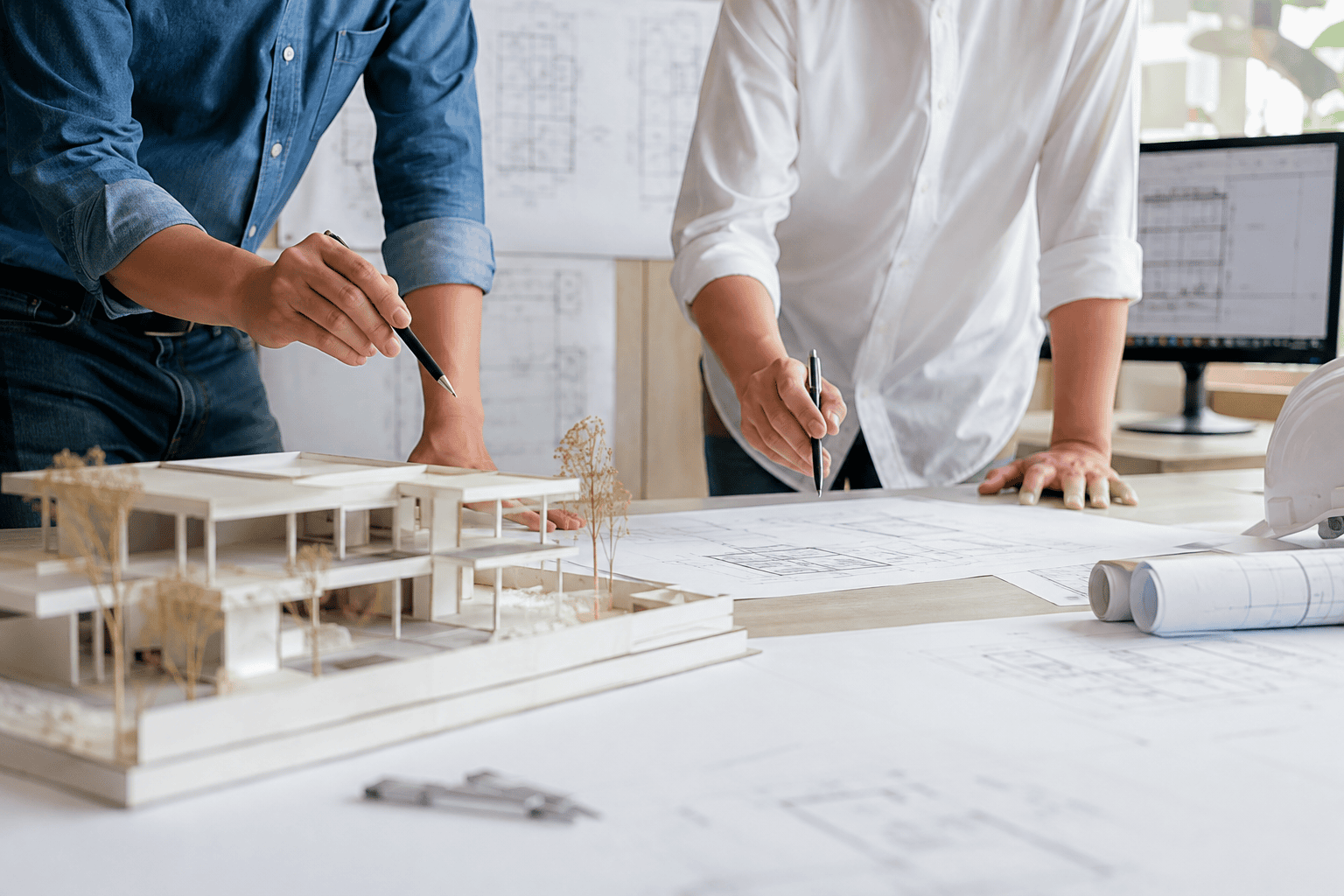
Have you ever looked at a building and wondered, “Who actually decides how this gets built?”
The architect?
The structural engineer?
The contractor?
The answer is: all of them play different but connected roles.
Architecture decides how a building should look, feel and function. Structural design makes sure that building can safely stand and perform as intended.
Think of it like the human body.
Architecture is somewhat like the body’s overall form and organisation.
Structural engineering is the skeleton that supports it.
You need both.
What Is Architectural Design?
Architecture focuses on the experience and function of a building.
An architect thinks about questions like:
- How should the spaces be arranged?
- Where should people enter?
- How should rooms connect?
- Where should windows and openings go?
- How much natural light should enter?
- How should the building respond to its surroundings?
- What should the building look and feel like?
The architect turns these requirements into a building design.
What Is Structural Design?
Structural design focuses on strength, stability and safety.
A structural engineer determines how the building will carry loads and transfer them safely to the ground.
This can involve designing:
- Foundations
- Columns
- Beams
- Slabs
- Walls
- Steel structures
- RCC structures
- Other structural elements
The structural system is what allows the architectural idea to become physically possible.
Architecture & Structural Design: The Difference
A simple way to understand it is:
Architecture asks:
“How should the building work and feel?”
Structural design asks:
“How can we make it stand safely and efficiently?”
Neither question is more important than the other.
A beautiful building that isn’t structurally sound is useless.
A structurally perfect building that doesn’t function well isn’t successful either.
Why Can’t the Architect Do Everything?
This is a common question.
Architects understand buildings extensively, but structural engineering involves specialised calculations, analysis and technical knowledge.
For example, imagine an architect designs a large open living space with minimal columns.
That’s a great architectural idea.
But the structural engineer needs to determine how that span can be supported safely.
The two disciplines need to work together to find the best solution.
What Happens When They Don’t Coordinate?
This is where real world construction problems often begin.
Imagine an architect finalises a floor plan.
Later, the structural engineer discovers that a column needs to be placed exactly where the architect planned a doorway.
Now someone has to change something.
The drawing changes.
The interiors may change.
The contractor may need to adjust work.
The timeline can shift.
Costs can increase.
A simple coordination issue can become a chain reaction.
This is why Architectural & Structural Design should be considered together rather than as two completely separate stages.
A Simple Example: Your Dream Living Room
Suppose you want a large, column free living room.
From an architectural perspective, this creates a spacious and open environment.
But structurally, the larger the span, the more carefully the structure needs to be designed.
The solution might involve different beam sizes, structural systems or materials.
The architect and structural engineer work together to find an option that protects both the design intent and structural requirements.
That’s collaboration in action.
When Should Structural Design Begin?
Ideally, structural thinking should begin early.
It doesn’t mean the structural engineer needs to finalise every detail before architectural design starts.
It means both teams should communicate while the design is developing.
This allows decisions to be made with a better understanding of:
- Space
- Structure
- Materials
- Cost
- Construction
- Safety
Early coordination is usually much easier than fixing problems after construction has started.
Does Structural Design Affect Cost?
Absolutely.
Structural decisions can influence the quantity of materials, construction methods, foundation requirements and overall project cost.
For example, unnecessary structural complexity can increase construction costs.
On the other hand, cutting corners on structural design can create serious safety and durability concerns.
Good structural engineering aims for the right balance between safety, performance and efficiency.
What About Interiors?
Architecture and structure also affect interiors.
The position of columns, beams, shafts and structural walls can influence furniture layouts, false ceilings, lighting and usable space.
This is another reason why an integrated approach is valuable.
The earlier different disciplines communicate, the fewer surprises appear later.
The Best Buildings Are Collaborative
The architect doesn’t “win” over the engineer.
The engineer doesn’t “override” the architect.
The best outcome happens when both work towards the same goal.
A successful project combines:
Architectural thinking
for experience, function and aesthetics.
Structural thinking
for safety, stability and performance.
Construction thinking
for practicality and execution.
Project management
for coordination, time and cost.
Final Thoughts
Architecture gives a building its identity.
Structural engineering gives it strength.
Together, they turn an idea into a building that people can actually use, occupy and enjoy.
That is why Architectural & Structural Design should never be viewed as competing disciplines.
They are two sides of the same building.
At Archisoft, architecture and engineering work together from the beginning to create spaces that are not only visually considered, but technically sound and built for the real world.