
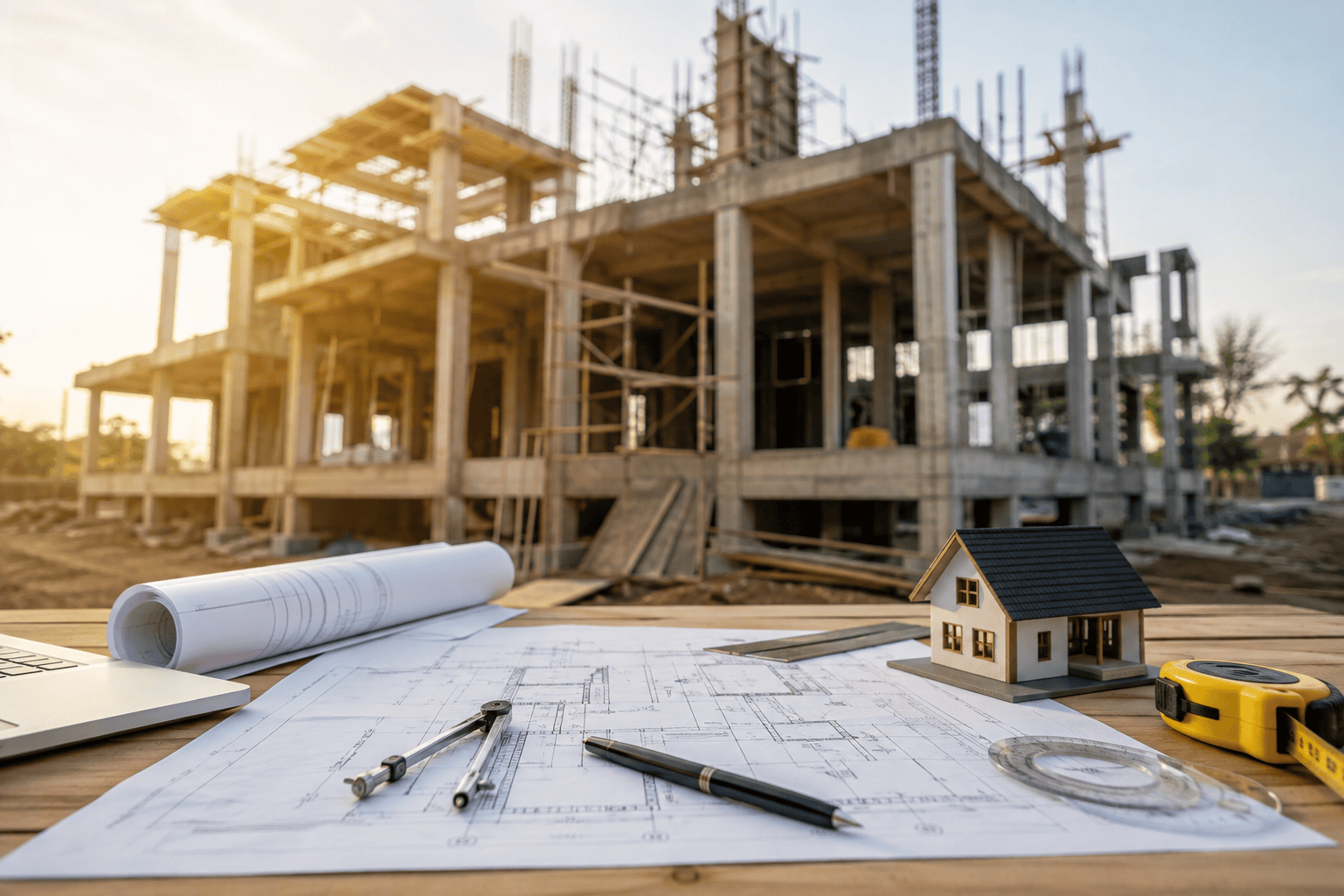
Building your own home is exciting.
You start with ideas: a bigger kitchen, a sunny balcony, a comfortable bedroom, a beautiful living room and maybe that little garden you’ve always wanted.
Then construction begins and suddenly you’re dealing with drawings, contractors, budgets, materials, approvals and a hundred decisions you didn’t know existed.
A little preparation can make that journey much easier.
Here are 10 things to know before building your dream home.
- Start With How You Want to Live
Don’t start with Pinterest.
Start with your life.
Ask yourself:
Where do you spend most of your time?
Do you work from home?
Do you entertain guests often?
Will your parents live with you?
Do you need space for children to grow?
Do you want a home that can adapt in the future?
Your home should be designed around your lifestyle not someone else’s.
- Understand Your Plot
Before thinking about the elevation or interiors, understand the land you’re building on.
The size and shape of the plot, road access, orientation, surroundings, levels and local regulations can all influence the design.
Two plots with the same area can have completely different design possibilities.
- Set a Realistic Budget
Your construction budget isn’t just about bricks, cement and labour.
You may also need to account for:
- Architectural fees
- Structural consultants
- Approvals
- Interiors
- Electrical work
- Plumbing
- Fixtures
- Landscaping
- External development
- Contingency costs
Keep some financial buffer for unexpected expenses.
Because in construction, surprises are rarely free.
- Don’t Design Every Room Separately
A home should feel like one connected space.
The relationship between rooms matters.
For example, the kitchen should connect logically with dining.
Bedrooms should have privacy.
Bathrooms should be conveniently located.
Circulation should feel natural.
Good planning is about how the entire house works together.
- Think About Light and Ventilation
Natural light can completely change how a home feels.
So can fresh air.
Before finalising your design, consider where sunlight enters, how rooms are ventilated and how the building responds to the local climate.
A well-designed home can feel brighter and more comfortable without constantly depending on artificial lighting and cooling.
- Think Beyond Today
Your needs may change.
Maybe today you need one bedroom.
Five years later, you may need another.
Maybe you work from an office today but could work from home tomorrow.
Maybe your family grows.
A good home design leaves room for change.
- Plan the Structure Early
The architectural design and structural design need to work together.
The placement of columns, beams and structural walls can affect the layout of your home.
Getting structural input early can prevent unnecessary changes later.
- Don’t Ignore Approvals
This is one of the least exciting parts of building a home but one of the most important.
Depending on your project and location, various permissions and approvals may be required.
Make sure you understand what is needed before construction begins.
It is much easier to plan for approvals than to discover a problem halfway through construction.
- Choose Your Professionals Carefully
Your architect, structural engineer, contractor and other consultants can significantly influence your construction experience.
Don’t choose purely based on price.
Look for:
Experience
Have they handled projects like yours?
Communication
Do they explain things clearly?
Coordination
Do the different teams actually work together?
Transparency
Are costs and responsibilities clearly discussed?
The right team can make a complicated project feel much simpler.
- Don’t Rush the Design Stage
This may be the most important point.
Once construction begins, changing your mind becomes expensive.
Moving a wall on a drawing is easy.
Moving a wall after it has been built is a different story.
Spend time understanding the design before construction starts.
Ask questions.
Walk through the plans.
Think about your daily routine.
Make changes early.
Your Dream Home Should Feel Like Yours
A dream home isn’t necessarily the biggest house or the most expensive one.
It’s the one that works for your life.
It gives you the right spaces, the right amount of comfort and the flexibility to grow with you.
Good planning helps make that possible.
So before you start construction, don’t just ask:
“How do I build my dream home?”
Ask:
“How do I want to live in it?”
That question can change the entire design.
Archisoft helps homeowners bring together architectural design, structural expertise and project planning to create homes that are thoughtfully designed from the ground up.